
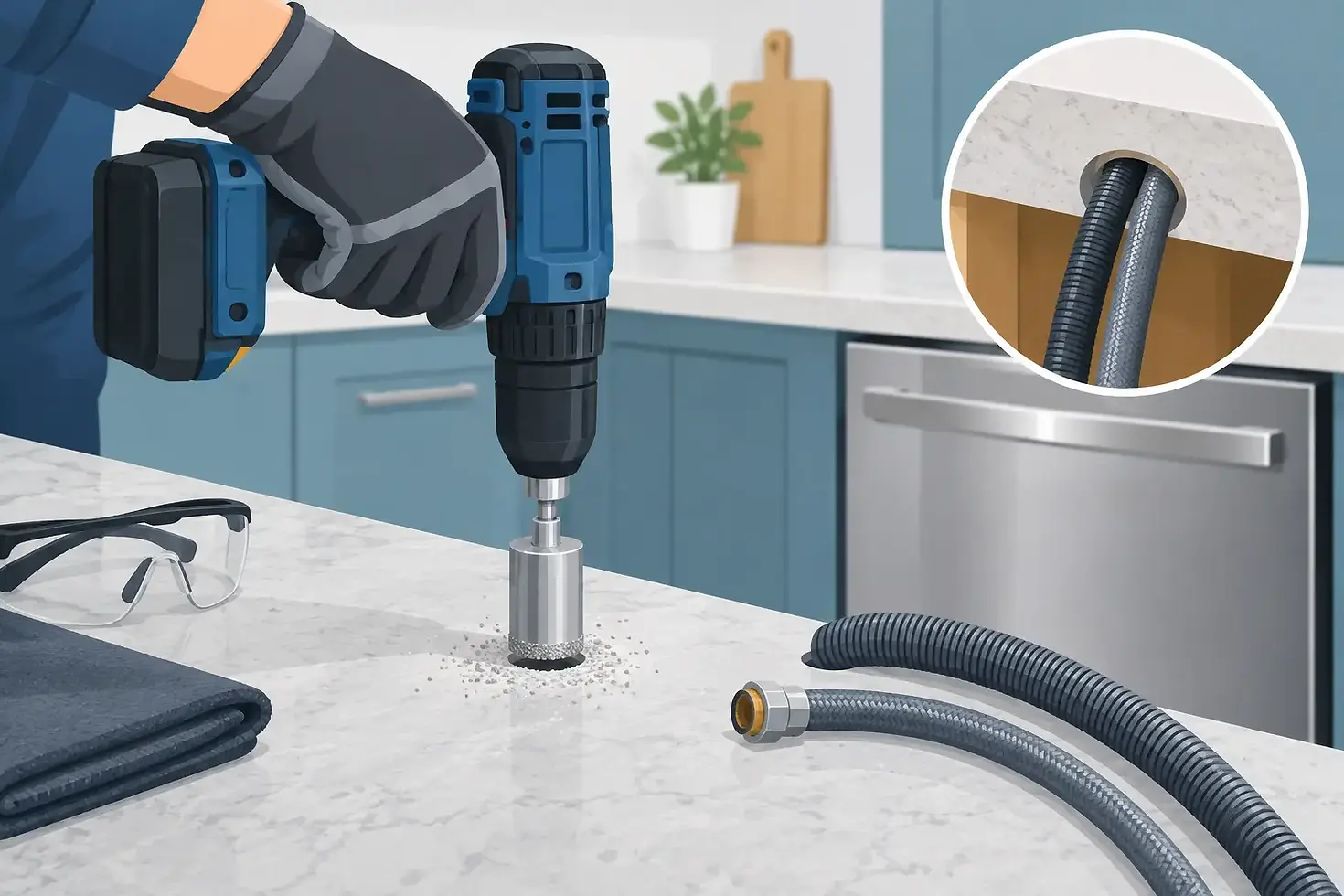
How to Drill Stone for Dishwasher Hoses Safely

A dishwasher is usually fitted beside the sink cabinet, which makes its water inlet, drain hose and power connection straightforward to route through cabinetry. Problems start when the required path is blocked by stone, an existing panel layout or a finished benchtop detail. If you need to drill stone for dishwasher hoses, do not treat it as a quick hole-saw job. A mistake can crack an installed slab, damage nearby cabinetry or create a serious silica dust hazard.
The first question is whether stone actually needs to be cut. In many kitchens, the correct route is a neat opening through the adjoining cabinet wall, below the benchtop. Where a stone return, waterfall end, stone panel or unusual installation is in the way, a precisely located stone penetration may be needed. That decision should be made before the plumber, cabinet installer and electrician arrive on site.
Does a dishwasher hose need a hole through stone?
Usually, no. Dishwasher hoses are normally passed through a cabinet side panel between the dishwasher cavity and sink cabinet. That route keeps all service connections accessible and avoids unnecessary work on the benchtop.
A stone cut-out can be required where a stone end panel closes off the appliance cavity, where a benchtop has been installed over an unsuitable service route, or where a renovation changes the position of the dishwasher after the stone is already in place. Some older kitchens also have stone details that make it impossible to create a clean cabinet-only pathway.
This is why measuring from the front alone is not enough. The location of the sink bowl, tap hoses, drawer runners, cabinet rails, electrical wiring, water pipes and dishwasher clearance all need to be checked. A hole that looks sensible from above may be unusable below the slab.
Drilling stone for dishwasher hoses is not a standard DIY job
Stone is hard, brittle and often expensive to replace. A hole drilled too close to an edge, seam, existing sink cut-out or unsupported section can start a crack that travels well beyond the drilling point. The risk is higher on thin material, heavily veined natural stone and slabs that already have stress around a sink or cooktop opening.
There is also the dust issue. Dry drilling or grinding stone can release respirable crystalline silica, particularly when working with silica-containing materials. This is not ordinary renovation dust. It can remain airborne, spread through a finished kitchen and create a serious health risk for workers and occupants.
The right approach is controlled wet cutting with suitable diamond tooling, water delivery and slurry management. Water cools the cutting area, helps reduce airborne dust and lowers heat stress on the stone. Heat matters because excessive friction can scorch, chip or fracture the surface around the hole.
Do not assume a general-purpose hole saw, a dry drill or a quick pass with an angle grinder will give an acceptable result. It may create chips around the opening, leave a rough edge that damages hoses over time, or compromise the slab itself.
Check the stone material before any cut is planned
The material determines whether a modification is appropriate, lawful and technically achievable. Natural stone, porcelain, sintered stone and other surface materials each require different tooling, speeds and support methods.
Engineered stone needs particular care. Since the national engineered stone ban took effect, there are strict limits around its manufacture, supply, processing and installation. Existing engineered stone should never be treated as an exception simply because it is already installed in a home. Before any work is considered, the material and proposed scope must be assessed against current NSW requirements.
If the slab cannot be confidently identified, do not guess. A specialist should inspect it, ask for available installation information and determine whether the work can proceed. In some cases, the safer answer is to alter cabinetry, reroute services or choose another installation solution rather than cut the stone.
How a safe dishwasher hose stone hole is planned
Good results are decided before the drill starts. A specialist will inspect the job from both sides of the proposed opening, not just mark a point on the visible stone face. They will check for voids, edges, joins, fixing points, plumbing and electrical services, as well as the room needed to feed the hose without sharp bends.
The hole size also matters. It must be large enough for the inlet and drain hoses to pass without being forced, but not so large that it removes more material than necessary. A protective sleeve or edge treatment may be needed so hose movement does not rub directly against a sharp stone edge.
The appliance manufacturer's installation requirements still apply. Dishwasher drain hoses commonly need a high loop or an approved connection arrangement to prevent backflow. The stone opening is only one part of the job. It must support a compliant plumbing installation, not dictate an awkward one.
Where power needs to pass through the same area, keep electrical planning separate from water service planning. A licensed electrician should determine the correct route, protection and connection point. Do not enlarge a stone opening on the day to force cables and hoses together because the services were not coordinated earlier.
Why wet cutting protects the benchtop and the home
On-site wet cutting is about more than keeping the kitchen tidy. It is a controlled cutting method that protects people, the installed slab and the surrounding home.
A proper mobile stone modification setup uses the correct diamond equipment, controlled water at the point of cutting and measures to contain slurry before it spreads through cabinetry or onto finished floors. Nearby surfaces are protected, the work zone is prepared and the opening is cut steadily rather than aggressively forcing a tool through the material.
This is especially valuable in a finished kitchen. Removing an installed benchtop to take it back to a factory can create extra handling risk, delay the project and disturb splashbacks, cabinets or appliances. When the material and work scope allow it, accurate on-site wet cutting avoids that unnecessary disruption.
StoneCut performs mobile wet cutting for suitable stone benchtop modifications across Sydney and surrounding areas. The work starts with checking the stone, the required opening and the surrounding installation - because precision is no use if the chosen location creates a plumbing, electrical or structural problem later.
Common mistakes to avoid around dishwasher hose penetrations
The most expensive mistake is cutting before the dishwasher has been confirmed, the cabinetry has been measured and the plumber has identified the final service route. Appliance dimensions and hose positions vary. Even a few millimetres can affect access behind the machine or prevent it from sitting flush with surrounding cabinetry.
Another common problem is placing the hole too low or too close to the rear of the cavity. The hose can then kink when the dishwasher is pushed into place. A kinked drain hose can affect performance, while a pinched inlet hose creates a leak risk that may remain hidden until the appliance is running.
Avoid cutting close to a stone corner or existing cut-out simply because it is the shortest route. The shortest route is not always the safest route for the slab. A slightly different cabinet modification may preserve more stone strength and produce a cleaner service path.
Finally, do not let a trade sequence force a rushed decision. If stone modification is required, arrange it before the appliance is installed and before final plumbing connections are locked in. That gives every trade clear access and allows the work to be completed without working around a heavy dishwasher in a confined cavity.
What to provide when requesting a quote
Clear photos save time and help identify whether the work is suitable. Include a wide photo of the kitchen, close-ups of the stone area, the dishwasher cavity, the adjoining sink cabinet and the underside where accessible. Measurements from the proposed hole to nearby edges, joins and cabinet walls are useful, along with the appliance model if it has been selected.
Mention whether the benchtop is natural stone, porcelain or another known material, and advise if the kitchen is occupied or newly installed. If you are unsure of the material, say so. Accurate information is better than an assumption when cutting an existing surface.
A dishwasher installation should not become a reason to gamble with a high-value benchtop. Confirm whether a stone hole is genuinely needed, coordinate the route with the relevant trades, and arrange specialist wet cutting before the final fit-off. Call or TXT NOW with photos and measurements so the right solution can be planned before anyone starts drilling.


Comments