

Sink Cut Out in Stone Benchtop Done Right
- Chip Fix
- Jun 17
- 6 min read

A sink cut out in stone benchtop is not the sort of job you want guessed, rushed or done dry. One wrong move can chip an edge, crack the slab, fill the house with hazardous dust, or leave you with a cut-out that does not line up with the cabinet, plumbing or sink profile. If the benchtop is already installed, the margin for error gets even smaller.
That is why this work needs to be handled as a specialist on-site modification, not a casual add-on. The stone might look solid and simple from above, but once you are cutting into an existing benchtop, you are dealing with finished surfaces, tight tolerances, surrounding joinery, and the real risk of silica exposure if the method is wrong.
Why a sink cut out in stone benchtop needs specialist cutting
Stone is unforgiving. Engineered stone, granite and other dense surfaces can all crack or chip if the cutting process creates too much heat, vibration or stress in the wrong area. Around a sink opening, that risk matters even more because you are removing a large section from the middle of a supported slab and leaving narrow bridges of stone at the front, back and corners.
The biggest mistakes usually happen before the blade even touches the surface. Poor measuring, incorrect sink templates, lack of support under the slab, or no allowance for tap holes and clips can all turn a straightforward cut-out into a costly problem. In an existing kitchen, there is also the issue of access. Splashbacks, overhead cupboards, walls, mixers and finished cabinetry can limit tool movement and make accurate cutting harder unless the operator is set up for on-site work.
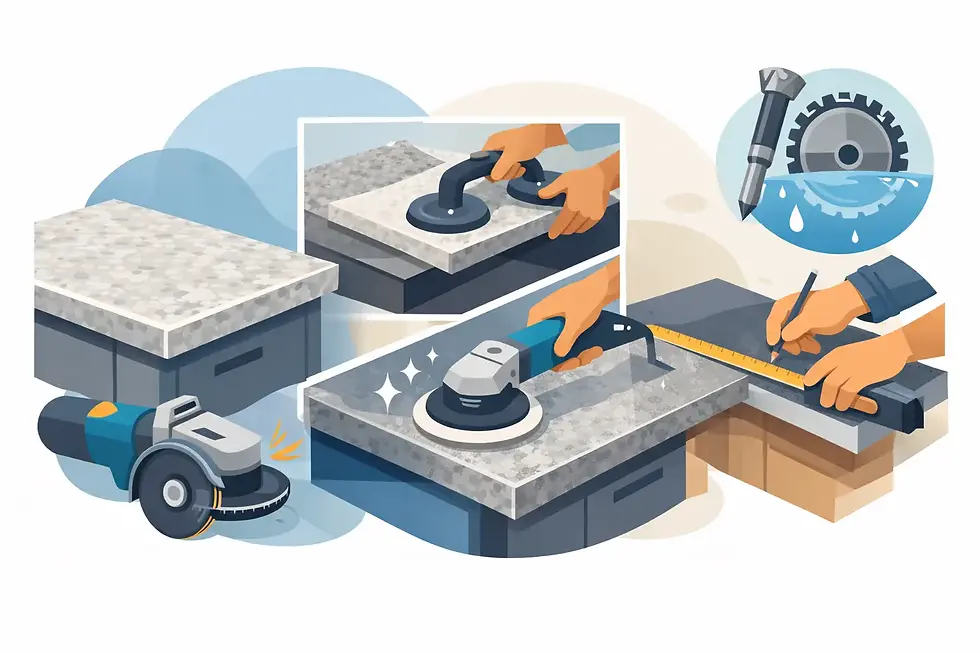
Then there is dust. Dry cutting stone is not just messy. It creates respirable crystalline silica, which is a serious health risk. That is why compliant wet cutting matters. Water suppresses dust at the source and helps keep the stone cool during cutting, reducing the chance of thermal stress and surface damage.
What makes on-site wet cutting the safer option
For many kitchens, laundries and butler's pantries, removing the benchtop and sending it away for modification is not practical. It can mean disconnecting plumbing, risking slab breakage during transport, delaying other trades and adding unnecessary cost. On-site wet cutting avoids that whole chain of problems when the work is planned properly.
A proper wet cutting setup is about more than spraying a bit of water around. The area needs to be controlled, adjacent surfaces protected, and the cutting process managed to contain slurry and keep the site clean. It also means understanding how the slab is fixed, where support rails sit, and how the cut-out will affect the remaining stone once material is removed.
This is especially important for retrofits. If you are replacing a top-mount sink with an undermount sink, changing sink size, or adding a sink where there was none before, the cut-out has to work with what is already there. Cabinets, plumbing runs and existing stone overhangs all have to be checked before any cutting begins.
Measuring for a sink cut out in stone benchtop
The cut itself is only one part of the job. Accurate measuring is what decides whether the sink fits properly and whether the finished result looks right. Sink manufacturers often provide templates, but templates are not always enough on their own. Real-world conditions on site can differ from the paper dimensions.
The operator needs to confirm the actual sink size, mounting type and final position. An undermount sink needs different tolerances from a top-mount sink. Drain placement matters. So does the cabinet opening below. If the bowl sits too close to a side panel, waste fittings and clips can become a problem. If the cut-out is oversized, there is no easy fix.
It also pays to think beyond the sink itself. Tap holes, filtered water taps, soap dispensers and Zip taps may need to be included in the same visit. It is far better to plan the full scope once than bring in another trade later and risk extra cutting near a finished sink opening.
Top-mount and undermount cut-outs are not the same job
A top-mount sink gives you a bit more forgiveness because the sink rim covers the edge of the cut. That does not mean the work can be rough. The line still needs to be clean, square and correctly positioned so the sink sits flat and seals properly.
An undermount sink is less forgiving. The exposed stone edge around the opening becomes part of the finished look, so the shape, radius and polish quality matter. Any chip-out or uneven line is visible every time you use the sink. Support and alignment also become more critical because the sink is fixed underneath the stone, not sitting on top of it.
Risks of getting it wrong
The most obvious risk is cracking. A crack can start from a corner, from an unsupported section, or from pressure applied while removing the centre piece. Sometimes it appears immediately. Sometimes it shows up later once the sink is installed and the slab is under load.
Chipping is another common issue, especially on polished surfaces or around tight internal corners. Poor cutting technique, the wrong blade, or inadequate cooling can all damage the visible edge. In an existing kitchen, that damage is often impossible to hide.
There is also the risk of contamination throughout the home if the cutting method is wrong. Fine stone dust can travel well beyond the kitchen and settle through adjoining rooms. For occupied homes, that is a serious problem. For trades working in finished renovations, it can create avoidable cleanup, delays and complaints.
Compliance matters too. Anyone arranging stone modification work should be asking how the cutting will be done, how dust will be controlled, and whether the operator is equipped for wet cutting on site. If those answers are vague, that is your warning sign.
When on-site modification makes the most sense
A mobile stone modification service is usually the right fit when the benchtop is already installed and the project needs accuracy without removal. That includes kitchen upgrades, sink replacements, cabinet changes, plumbing reconfiguration and renovation work where the slab is staying in place.
It also suits jobs where multiple penetrations are needed at once. A sink cut-out, tap hole, soap dispenser hole and power point cut can often be planned together, which keeps the project moving and reduces the risk of piecemeal changes later.
For builders and trades, it can be the difference between holding up a handover and getting the final fit-off done properly. For homeowners, it means keeping the existing benchtop and avoiding the cost of replacement when only a precise alteration is required.
What to have ready before booking the job
The fastest way to move a sink cut-out forward is to have clear site photos, sink details and measurements ready from the start. Good photos should show the full benchtop, the cabinet below, nearby walls or splashbacks, and anything that may affect access.
It helps to confirm whether the stone is engineered stone or natural stone, whether the slab is already installed, and whether the sink is top-mount or undermount. If other holes are needed for taps or accessories, say so upfront. These details matter because they affect setup, cutting sequence and time on site.
If plumbing or cabinetry still needs adjustment, that should be coordinated before the cut where possible. The cleaner the planning, the cleaner the job.
Why timing matters with other trades
A sink cut-out often sits in the middle of other work. Cabinet installers need alignment confirmed. Plumbers need the sink position locked in. Electricians may be waiting on nearby penetrations. If the cut-out is delayed or done incorrectly, everyone behind it gets pushed back.
That is why specialist stone modification works best when treated as a defined trade service, not an afterthought. Accurate information, clear scope and proper scheduling save time for everyone involved.
Precision matters, but so does how the job is done
Anyone can say they can cut stone. The real question is whether they can do a sink cut out in stone benchtop safely, cleanly and without putting the slab or the household at risk. On-site wet cutting is the right approach when you need to protect the stone, control silica dust and finish the job where the benchtop actually sits.
If the benchtop is already in place, the safest path is to treat the cut-out like the specialist modification it is. Get the measurements right, use compliant wet cutting, and bring in an operator who knows how to work precisely in a finished space. If you are ready to move, call or TXT NOW with photos and the job details so the cut can be assessed properly before anyone touches the stone.


Comments