

Is Wet Cutting Stone Dust Free? The Real Answer
- Chip Fix
- 2 days ago
- 6 min read

A new cooktop, sink or Zip tap opening should not leave your finished kitchen coated in stone dust. But is wet cutting stone dust free? Not in the literal sense. Wet cutting is the safest practical method for controlling airborne dust during stone modification, yet it still creates water-based slurry that must be contained, collected and cleaned correctly.
That distinction matters. When stone is cut dry, fine particles can become airborne quickly and travel through a home, renovation site or occupied workplace. When it is cut with the correct water supply, the water suppresses dust at the blade before it can disperse through the air. The result is a far cleaner and safer job, provided the operator uses the right equipment, controls the slurry and protects the work area.
Is Wet Cutting Stone Dust Free in Practice?
For homeowners and trades, “dust-free” generally means no visible cloud of cutting dust through the kitchen, no fine residue settling over cabinets and appliances, and no dry silica dust being released into the surrounding area. Proper wet cutting is designed to achieve exactly that.
However, water does not make the material disappear. The cutting process produces a wet slurry containing stone particles, water and potentially silica. That slurry needs to stay at the cutting point, be captured before it runs across the benchtop or cabinetry, and be removed as part of the job. A specialist should never treat wet cutting as an excuse for poor site control.
A clean on-site stone cut relies on more than putting water on a blade. It requires a controlled water feed, suitable cutting equipment, slurry management, protection for finished surfaces and careful clean-up. If any of these parts are missing, a wet cut can still create mess, staining risks or exposure concerns.
Why Dry Cutting Is the Wrong Approach Indoors
Stone benchtops are often made from natural stone, porcelain, sintered stone or engineered products. Many of these materials can contain crystalline silica. Cutting, grinding or drilling them dry can release respirable crystalline silica, which is too fine to see clearly and can remain airborne after the work stops.
This is not ordinary renovation dust. Exposure to respirable silica dust is associated with serious long-term health risks, including silicosis, lung cancer and other respiratory disease. That is why stone work must be planned around dust control, not simply cleaned up after the fact.
In a finished kitchen, dry cutting also creates immediate practical problems. Dust can enter drawers, settle inside appliances, contaminate adjacent rooms and sit in places that are difficult to clean properly. Covering nearby areas helps, but it does not replace controlling dust at its source.
Wet cutting controls the issue where it begins. Water cools and suppresses the material as the blade cuts, greatly reducing the chance of airborne dust escaping into the room. It also helps protect the stone itself by reducing heat at the cut line.
Water Protects More Than the Air
A stone benchtop is a high-value finished surface. Whether the job is a cooktop cut-out, an undermount sink opening, a tap hole, a power point cut-out or a modification for new cabinetry, accuracy matters just as much as dust control.
Cutting stone creates friction and heat. Too much heat in one area can place stress on the slab, particularly around corners, narrow rails and existing cut-outs. A wet-cutting process keeps the blade and stone cooler, helping to reduce the risk of heat-related cracking, chipping and damage to the surface.
That does not mean every slab can be altered without risk. Existing cracks, unsupported sections, thin stone bridges, damaged joins and poorly installed benchtops all need to be assessed before work begins. A competent operator will inspect the proposed cut, measure precisely and explain any limitations before putting a blade on the stone.
The safest cut is not just wet. It is planned.
What Proper On-Site Wet Cutting Looks Like
The quality of the result comes down to site preparation and process control. A mobile stone cutting specialist should first confirm the dimensions, placement and clearances required for the appliance or fitting. This is especially important when cabinet installers, plumbers and electricians are working to set measurements.
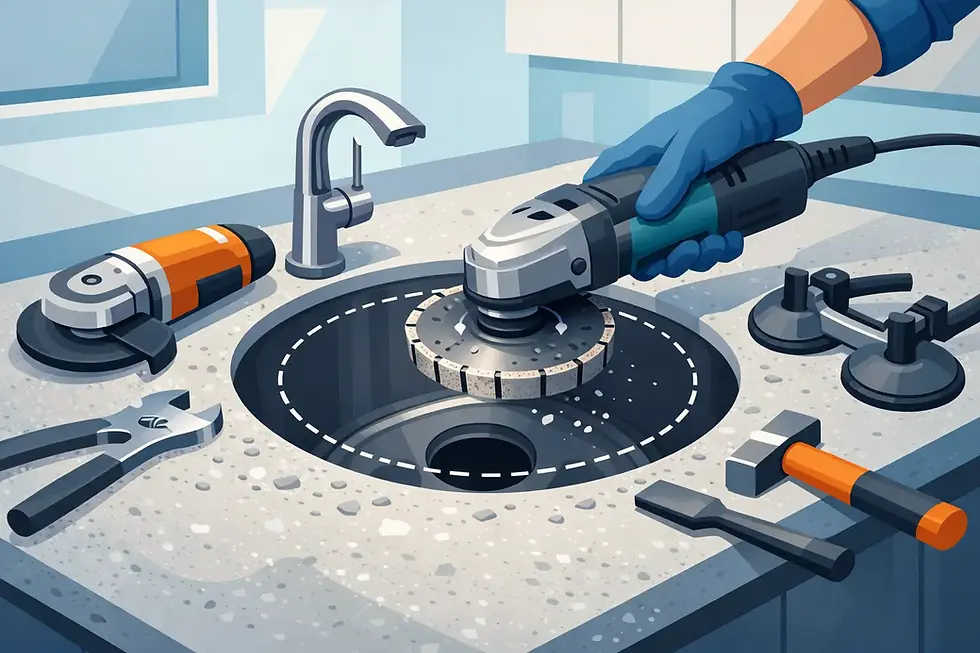
The benchtop and surrounding joinery should then be protected. Water and slurry are managed around the work area so they do not run into cupboards, onto floors or behind appliances. Depending on the job, this can involve controlled water delivery, collection methods and barriers to protect the cabinetry and finished surfaces.
During cutting, the operator keeps the blade properly supplied with water and works at a controlled pace. Rushing a cut can compromise the edge, increase chipping or place unnecessary stress on the slab. Once the opening or hole is complete, the slurry is collected and the immediate area is cleaned rather than left for another trade to deal with.
This is why an on-site stone modification is not a job for a general handyman with a grinder. The equipment, technique and safety process all matter.
Wet Cutting Still Needs Silica Controls
Wet cutting substantially reduces airborne silica dust, but it should be treated as one part of a broader safety process. The work area still needs to be controlled, particularly in an occupied home or an active renovation. Nearby workers should not be standing over the cut, and the operator must avoid allowing slurry to dry and later become dust.
The material being cut also matters. Some products have higher silica content than others, and requirements around engineered stone and high-risk processing are strict in Australia. If your benchtop is engineered stone, the proposed alteration should be assessed carefully before work starts. Do not assume that a small cut-out or a single hole is low risk simply because the job is quick.
For trades coordinating a kitchen fit-out, this means booking the stone modification at the right stage. Measurements should be final, appliance specifications confirmed and access clear before cutting begins. Rework creates extra cost, delays and unnecessary processing of the stone.
Common Myths About Wet Stone Cutting
One common myth is that wet cutting means there is no clean-up. In reality, there should be very little airborne dust, but there will be wet slurry to manage. A professional leaves the work area clean, not merely wet.
Another is that any saw with a hose attached is safe. Effective dust suppression depends on consistent water delivery at the blade, suitable tools and an operator who understands how the material behaves. Too little water, poor containment or dry finishing work can undermine the entire process.
It is also a mistake to think the cheapest option is the safest option. A low-cost dry cut can create a much bigger problem than the original benchtop modification. Dust contamination, damaged cabinetry, cracked stone and delays to other trades quickly outweigh any initial saving.
Finally, wet cutting does not guarantee a perfect result where the slab is already compromised. A specialist can reduce risk through correct methods and careful planning, but no honest operator should promise that a cracked, poorly supported or badly installed benchtop carries zero risk.
When You Need a Specialist Rather Than Removal
Many homeowners assume a stone benchtop has to be removed and sent back to a fabricator whenever a new appliance or fitting changes size. Often, that is not necessary. An accurate on-site modification can create the opening required without the cost, disruption and breakage risk involved in removing the slab.
This is useful when upgrading from gas to induction, fitting a larger sink, adding a filtered water tap, installing a popup power point or changing kitchen services. It is also valuable for cabinet installers and plumbers who need a specific adjustment completed before final fit-off.
StoneCut provides mobile, precision wet cutting for these types of benchtop modifications across Sydney and surrounding areas. Clear photos of the benchtop, the required cut and the appliance or fitting specifications make it easier to assess the work before attending site.
Before booking, make sure the final location and dimensions are confirmed. Have the appliance template or manufacturer’s cut-out size ready, identify any nearby joins or existing cracks, and ensure the area under the benchtop is accessible. A well-prepared job protects the stone, keeps other trades moving and gives you the cleanest possible result.
Wet cutting is not magic and it is not literally free of every particle. It is the correct way to control dust at the source while making precise changes to an installed stone benchtop. Choose an operator who treats water control, slurry collection and workmanship as part of the same job - because they are.


Comments