
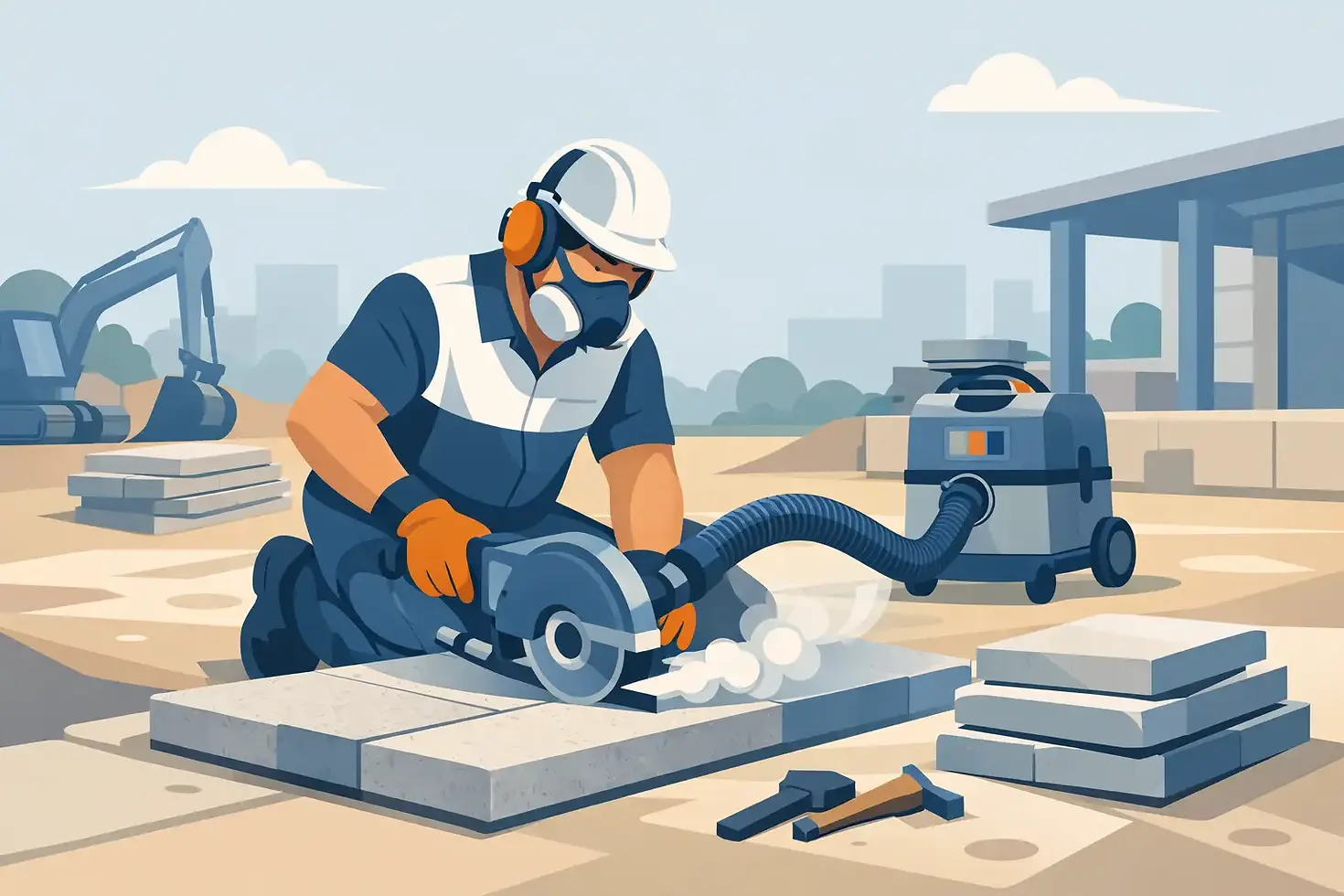
Dust Free Stone Cutting On Site

A stone benchtop can be the most expensive surface in the room, and one bad cut can ruin it. That is why dust free stone cutting matters. If you need a new sink cut-out, a larger cooktop opening, a tap hole or a power point modification, the cutting method is not a small detail. It affects safety, finish quality and whether your existing benchtop stays intact.
For homeowners and trades alike, the real issue is simple. You need the stone altered accurately, without filling the house with hazardous dust and without risking cracks, chips or heat damage. In a finished kitchen, there is no room for guesswork.
What dust free stone cutting actually means
In practical terms, dust free stone cutting means wet cutting carried out with the right equipment, controls and on-site protection to suppress airborne dust at the source. Stone is not being cut dry and then cleaned up later. The goal is to prevent the dust becoming an air contamination problem in the first place.
This is especially important with engineered stone and other silica-containing materials. Dry cutting can release fine respirable crystalline silica dust, which is a serious health risk. Once that dust spreads through a home or work area, it is not just a mess issue. It becomes a safety issue for everyone nearby.
Wet cutting uses water to cool the blade and control the dust while the cut is being made. Done properly, it is the safer and cleaner way to modify benchtops on site. It also helps protect the stone itself, because the cutting edge stays cooler and the surface is less likely to suffer stress from excessive heat.
Why dry cutting is the wrong call
Some jobs still get approached the wrong way. A tradie may think a quick dry cut will save time, or a general operator may not have the right wet cutting setup for on-site work. That shortcut can cost a lot more than it saves.
Dry cutting can send dust through cupboards, drawers, splashbacks and adjacent rooms. It can settle into appliances, soft furnishings and air-conditioning systems. In an occupied home, that is a major problem. In a renovation, it can contaminate nearby trades and finished surfaces.
There is also the issue of heat. Stone cutting creates friction. Without water cooling the process, the slab is under more stress. Depending on the material, the thickness and where the cut is being made, that can increase the chance of edge damage, chipping or cracking. Not every slab will fail under dry cutting, but the risk is higher, and with a finished benchtop, higher risk is not good enough.
Where on-site dust free stone cutting is used
Most people call for this service when the benchtop is already installed and something needs to change. That might be a kitchen upgrade, a plumbing alteration or a cabinet adjustment that changes where fixtures need to sit.
Common jobs include enlarging cooktop cut-outs, creating sink cut-outs, drilling tap holes, adding holes for Zip taps, making room for pop-up power points and adjusting benchtops for new appliances or fittings. Cabinet installers, plumbers and electricians often run into these situations late in a project, when everything else is ready and the stone is the last obstacle.
This is where mobile on-site work makes sense. Removing a benchtop and sending it back to a factory is slow, risky and often not practical. Transport alone can create damage. If the slab is large, heavy or already bonded in place, removal may create more problems than the original modification.
Why precision matters as much as safety
A dust-controlled cut is only half the job. The other half is accuracy.
Stone does not forgive rough work. A sink opening that is out by a few millimetres can leave gaps, put stress on the fixture or stop the install altogether. A poorly placed tap hole can interfere with mixers, splashbacks or cabinetry below. A cooktop cut-out that is oversized can turn into an expensive replacement problem very quickly.
Good on-site stone cutting comes down to planning, measurement and understanding the slab. The operator needs to account for the material type, thickness, support points and the location of joins, edges and existing cut-outs. A narrow strip between a sink and a hob, for example, needs a different level of care than an open section in the middle of a broad island bench.
That is why specialist work matters. This is not just about owning a saw. It is about knowing how to modify a high-value surface without compromising its structure or finish.
Dust free stone cutting for existing kitchens
Existing kitchens are where the benefits are clearest. The cabinetry is in, the walls are painted, the appliances may already be fitted, and the household often still needs to function around the work.
In that setting, dry cutting is a poor option. Fine dust can spread into every corner of the room and beyond. Clean-up takes longer, the disruption is worse and the health risk is harder to control.
Wet cutting on site is better suited to a lived-in environment because it contains the problem where it starts. It also avoids the upheaval of trying to remove a fully installed slab. For many Sydney homeowners, the choice is not between two equal methods. It is between a controlled specialist service and a risky workaround.
What to expect from a proper on-site process
A professional dust free stone cutting job should start before any blade touches the benchtop. Clear job photos, dimensions and details about the required modification help confirm what is possible and how the work should be approached.
On site, the work area should be assessed and protected. Measurements need to be checked against the actual fixtures being installed, not guessed from memory or rough notes. The cutting method should suit the material and the required finish. Where polishing or edge refinement is needed after the cut, that needs to be part of the plan as well.
Not every job is identical. Natural stone and engineered stone can behave differently. Older slabs may have hidden weaknesses. Tight spaces can affect tool access. A smart operator will tell you if a job has limitations rather than pretending every modification is straightforward.
That directness matters. Sometimes a request is possible but needs a different approach. Sometimes the risk profile changes because the cut is too close to an edge or an existing opening. The right answer is not always yes on the spot. The right answer is the one that protects the benchtop and the people around it.
Choosing the right specialist
If you need stone modified on site, ask how the cutting is done. If the answer is vague, that is a warning sign. You want clear information about wet cutting, dust control, on-site protection and experience with installed benchtops.
You also want someone who works in this niche regularly. There is a big difference between general building work and precise benchtop modifications. The stakes are higher because the surface is finished, visible and expensive to replace.
For Sydney kitchens and renovation projects, StoneCut focuses on exactly this type of work - safe, precise wet cutting carried out on site for existing and new benchtops. That matters when the job involves silica risk, occupied homes and fittings that need to land exactly where they should.
When speed matters, method still matters more
A lot of these jobs come up late. The plumber is booked, the sparky is waiting, the cooktop has arrived, and everyone wants the stone altered fast. Fair enough. Renovation timing is rarely generous.
But fast should not mean rushed. The best result is a job that is done promptly and done properly. A clean, compliant wet cut made on site is usually the quickest path to completion because it avoids unnecessary slab removal, reduces clean-up and keeps the project moving.
If you are planning a benchtop modification, think beyond the cut itself. Think about dust, health, finish quality and the cost of getting it wrong. A stone benchtop is not the place for shortcuts. Get the method right, and the rest of the job has a much better chance of going smoothly.


Comments